Public Man-Made Death

In an article in the Journal of the American Medical Association, historian Richard Rhodes spoke about a certain kind of dying: “the deaths caused not by microbe or misfortune but by policy—by war, by neglect, by privation deliberately imposed.  Artificially induced famine. The willful dismantling of the infrastructure that keeps the poor alive. Rhodes gave the thing a name. He called it public man-made death….”

Two reports were quoted. One in The Lancet said: “… in the single year since USAID was destroyed, on the order of seven hundred thousand human beings have already died who would otherwise be alive. The Lancet study calculated that the agency had saved some ninety-two million lives over the previous two decades.”

From a commentary by Msgr. Arthur Halquin.

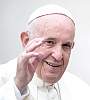
Pope Leo and the U.S.

From the UCAN news service

Meeting reporters outside his villa in Castel Gandolfo Nov. 18, 2025, Pope Leo said, “No one has said that the United States should have open borders,” adding: “I think every country has a right to determine who and how and when people enter.”

However, immigration policy should “look for ways of treating people humanely, treating people with the dignity that they have.”

The Real America

I’m not sure who Adam is or where this came from but to me it represents the best of what the United States can be.

[A Maryknoll colleague sent it to me. Thanks, Roberta!]

Are you ready for some good news? I know I am.

We are told, over and over, that America has gone cold on the rest of the world. That we have decided the people on the other side of the ocean are a threat to be kept out. That the welcome mat got rolled up and put away for good.

Then a soccer team from the North African nation of Algeria showed up in Lawrence, Kansas, and within a week the whole town was wearing green.

For today’s Good News Sunday, I want to tell you about one of the best things happening in this country right now. It is happening at a soccer tournament, and it has almost nothing to do with soccer.

The World Cup is here, 48 teams playing across the United States, Canada, and Mexico. Each team in the tournament picks a base camp, one town to live and train in between matches. Germany set up shop in Winston-Salem, North Carolina. Spain is training in Chattanooga, Tennessee. And Algeria, playing two of its games up the road at Arrowhead, picked Lawrence and made it home for the summer.

What the people of Lawrence did with that is the part I can’t stop thinking about.

It started small, with a whole town of people who had never given Algeria much thought deciding, more or less overnight, that this was their team now. Flags went up in shop windows. Folks pulled on the green jerseys. People drove over just to catch a glimpse of the players. And then a local news crew stopped an older gentleman on a Lawrence sidewalk, standing in front of a storefront draped in a whole row of Algerian flags he had clearly just gone out of his way to find.

They asked him what he actually knew about the country whose colors he was flying. He grinned, paused for a beat, and said something along the lines of: not much yet — but we want to welcome you here. There is no agenda in that man. Nothing performative. Just a neighbor, thrilled to his bones that these strangers chose his town, and perfectly at ease with the fact that he has a lot left to learn about them.

The welcome only got bigger from there.

The University of Kansas, the state’s flagship school that calls Lawrence home, sent its marching band out to the training ground. They had spent the previous days learning Algeria’s national anthem, note for note, and they played it as the players walked out for practice. Think about what that means for a moment.

These men are thousands of miles from their families, living out of a hotel in the American Midwest, preparing for the biggest sporting event of their professional lives. And the first thing they hear when they step onto the grass is the sound of their own country’s song, played by a hundred American college kids in red and blue who learned it just for them. Several of the players stopped walking. A few of them looked like they weren’t sure what to do with themselves.

Algeria did its part, too. The team opened a training session to the public and spent the afternoon out on the grass with neighborhood kids, walking them through drills, signing autographs, posing for pictures. There are children from small-town America who are going to be telling the story of the day they trained with a World Cup team for the rest of their lives. And the Algerians have spent the last week calling themselves honorary Kansans, falling hard for a corner of a state most of them could not have found on a map two months ago.
But it’s not just Lawrence.

This is happening all over the country, in towns you would never expect.

The city of Alexandria, Virginia threw a street festival with an evening of Croatian food and music, and wrapped a city bus in the team’s red and white. After crowds in Spokane, Washington flocked to watch Egyptian superstar Mohamed Salah, a brand-new Egyptian restaurant in town suddenly had locals lining up for food most of them had never tasted. All told, 19 American communities that are not hosting a single match still raised their hand to take in a national team and call them neighbors for a month.

There is a story we get told constantly about who we have become. That Americans have soured on outsiders. That we have decided the rest of the world is a threat. That we look at people who do not talk like us or pray like us or come from where we come from and see a problem instead of a person.

And then a college town in Kansas goes and learns every note of a North African country’s national anthem, just so a group of strangers feel at home for a few weeks. An old local stands in front of a row of its flags and tells them, in so many words: we don’t know much about you yet, but we are awfully glad you came.

That is who we actually are when nobody is telling us to be afraid. The band on the field, playing somebody else’s song as if it were their own. The neighbor who knows next to nothing about you and waves you in anyway. We forget it sometimes. The good news is that it takes about one afternoon to remember.

That, my friends, is good news for your Sunday.

— Adam

Fratelli Tutti

Pope Francis’ Encyclical

Human rights need to be in our awareness these days as the president and congress work at voter suppression and encourage state and local authorities to do the same.

22. It frequently becomes clear that, in practice, human rights are not equal for all. Respect for those rights “is the preliminary condition for a country’s social and economic development. When the dignity of the human person is respected, and his or her rights recognized and guaranteed, creativity and interdependence thrive, and the creativity of the human personality is released through actions that further the common good”. Yet, “by closely observing our contemporary societies, we see numerous contradictions that lead us to wonder whether the equal dignity of all human beings, solemnly proclaimed seventy years ago, is truly recognized, respected, protected and promoted in every situation. In today’s world, many forms of injustice persist, fed by …. a profit-based economic model that does not hesitate to exploit, discard and even kill human beings. While one part of humanity lives in opulence, another part sees its own dignity denied, scorned or trampled upon, and its fundamental rights discarded or violated”. What does this tell us about the equality of rights grounded in innate human dignity?

Kentucky Primary

Kentucky holds its primary election for candidates for the November election on this Tuesday, May 19, 2026. A warning and information has been published by Sharp Objects, a progressive pro-democratic civic group:

Jefferson county elections for Mayor and Metro Council are now non-partisan, meaning there will be no party affiliation listed by the candidates’ names. 

So, you’ll need to know the names of the candidates you want to support in those races. Be sure to do your research and make a list of the candidates you’ll support before you go to the polls.

Why the change to our ballots? The GOP-led KY Legislature wants to gain influence over Louisville – one of two blue dots in a very red state. They passed legislation to change our elections – Jefferson County residents had no say! They hope to confuse voters and gain an edge, moving closer to a one-party system – the goal of the current regime. 

Given the fallen state of the Republican party, we cannot in good conscience recommend any of them.

Kentucky Primary

Kentucky holds its primary election for candidates for the November election on this Tuesday, May 19, 2026. A warning and information has been published by Sharp Objects, a progressive pro-democratic civic group:

Jefferson county elections for Mayor and Metro Council are now non-partisan, meaning there will be no party affiliation listed by the candidates’ names. 

So, you’ll need to know the names of the candidates you want to support in those races. Be sure to do your research and make a list of the candidates you’ll support before you go to the polls.

Why the change to our ballots? The GOP-led KY Legislature wants to gain influence over Louisville – one of two blue dots in a very red state. They passed legislation to change our elections – Jefferson County residents had no say! They hope to confuse voters and gain an edge, moving closer to a one-party system – the goal of the current regime. 

Given the fallen state of the Republican party, we cannot in good conscience recommend any of them.

Trump’s threats–War Crimes

President Donald Trump threatens that “a whole civilization will die tonight” unless Iran strikes a deal with the United States by 8 p.m. Eastern on April 7.

The National Catholic Reporter quotes Leo XIV as calling the threats “truly unacceptable” and said that such attacks would violate international law. In some of his strongest comments yet against the war, Leo urged Americans and others to demand that political leaders reject war and work for peace.

“Today as we all know there was this threat against all the people of Iran. This is truly unacceptable,” Leo said.

NCR reported further that “theologians, priests, academics, authors, media personalities, bishops and others took to social media platforms April 7 to warn that military strikes on civilian targets and infrastructure in Iran would constitute grave evils and violate the Catholic Church’s just war tradition.”

This is not primarily a matter of politics but of morality, of right and wrong, of sin and evil.