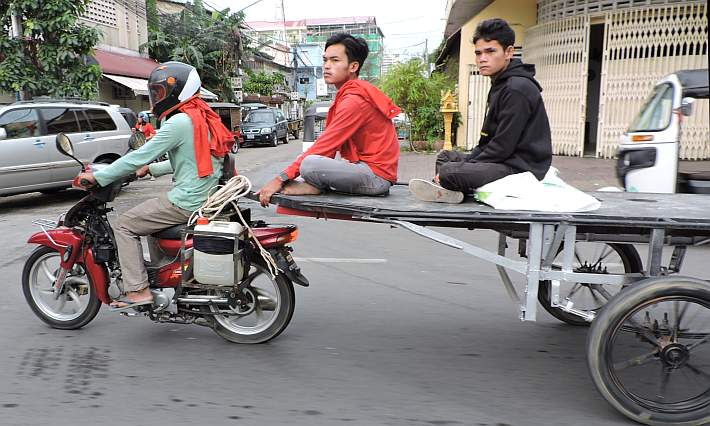
Going to work
Charlie Dittmeier's Home Page
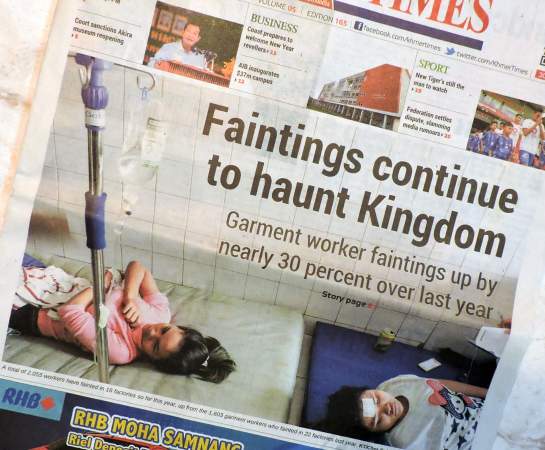
Faintings by factory workers are a regular occurrence here. They do all kinds of tests, improve ventilation, advise the workers to eat better, get more sleep, whatever, but I don’t think that’s going to change a thing. For whatever reason, it’s a cultural phenomenon with its own expectations. One young woman faints for some reason–or maybe just suggests that she feels funny or something–and that is the trigger, giving permission for everyone else to “faint” too. There’s probably no problem. It’s just what you’re supposed to do. I suspect the best response is to have a section of clean factory floor and just lay them side by side until they decide they’ve been on the floor long enough and them let them go back to work. Taking them to clinics, etc., probably doesn’t help and just perpetuates the problem.
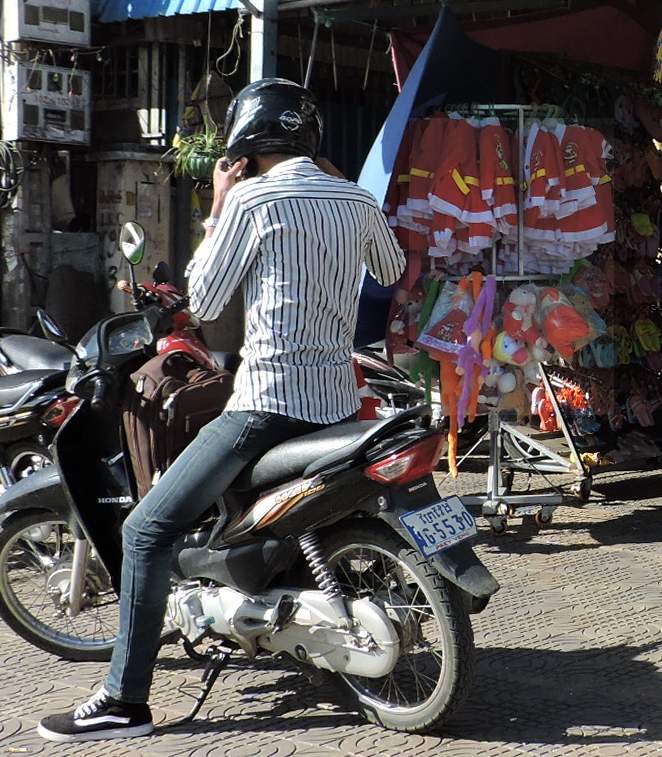
 This is the old-style license plate for Cambodian vehicles. A new style of plate was introduced about eight or nine years ago but there was no requirement to replace existing plates and some like this one are still around. Their numbers are diminishing, though.

There are no enforced traffic or safety rules in Cambodia, either for drivers or for passengers. Anything goes. Today we were driving to Kampot Province and saw this little girl standing in the back of a truck on the highway. At least she’s holding on–and has something to hold on to!
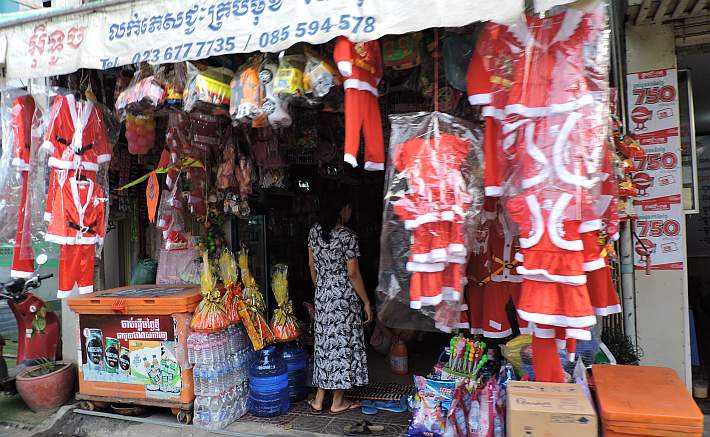
The understanding of Christmas isn’t very deep in Cambodian society and most outward signs of the season are commercially driven and geared toward children.

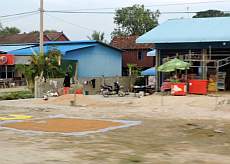
We are in the rice harvesting season now. Click here for some photos of farmers drying their rice crop.
When Maryknoll first moved to its office on Street 320 in Phnom Penh, down below my second-floor window was a little village of ten one-room units, two strips of five units each facing each other on one house-sized lot. Access to this little community was through a narrow alley leading out to the street.
 Shortly after we occupied the house, the owner of the little village moved everyone out, tore down the two strips of one-room apartments and put up a three-story metal shed in which he set up a metal fabrication company. They made steel gates, doors, and railings and such–with a lot of banging and grinding.
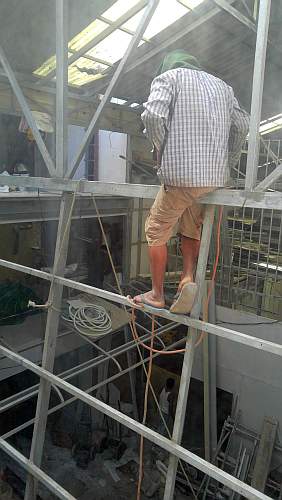
Now that little plot of land is being subjected to more change. The four-story building facing the street (behind which is the lot) is being extended back over the lot to make the building longer. The sheet metal walls of the fabrication shop have been removed and it seems walls of brick and concrete are being extended from the existing house to make new walls around the lot below my window. Here is a picture of a young man using a torch to cut away some of the scaffolding that held the metal walls before.

“It’s kinda like one of those fully-flat First Class seats on Singapore Airlines….”
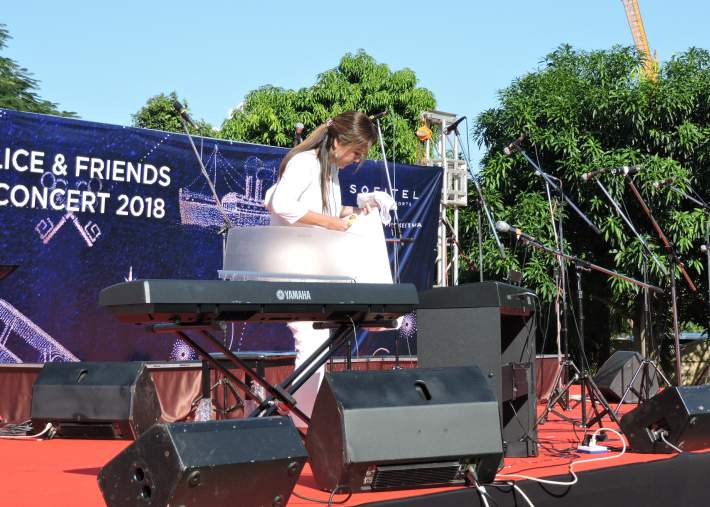
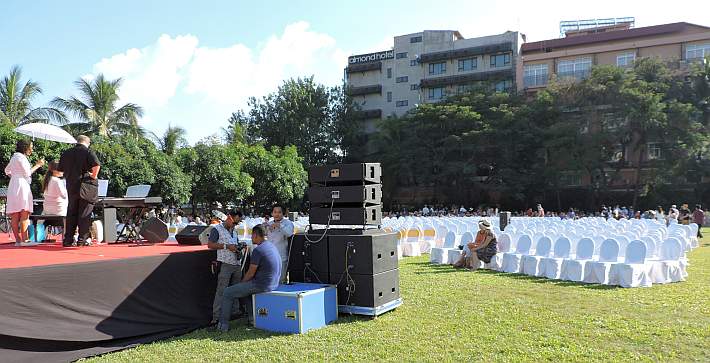
Musica Felice (Happy Music) is a choral group organized and directed by Ms. Miwako Fujiwara, a professional keyboard player and music teacher. Many members of the choirs at our two English churches are musicians and singers with Miwako. Last Sunday they presented a first-ever outdoor concert at a five-star hotel, along with the 9th Harmonics, a male filipino choral group, and a jazz group.
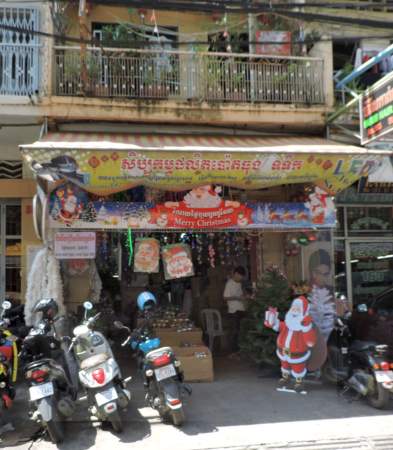 This week I was riding a motorcycle taxi through a new neighborhood and saw what I thought were the first Christmas decorations I had seen for this year. People here don’t really understand Christmas and think it is more about Santa Claus (Fr. Christmas) than about Jesus. The stores realize, though, that they can make money selling Christmas things and so when the big supermarkets, etc., that cater to the foreigners start putting up Christmas decorations, the smaller shops will follow. I thought this small shop was getting ahead of the rush, but then I realized this is the shop that is SELLING the decorations that the other stores will buy to put up in another couple weeks.