188. These considerations help us recognize the urgent need to combat all that threatens or violates fundamental human rights. Politicians are called to “tend to the needs of individuals and peoples. To tend those in need takes strength and tenderness, effort and generosity in the midst of a functionalistic and privatized mindset that inexorably leads to a ‘throwaway culture’… It involves taking responsibility for the present with its situations of utter marginalization and anguish, and being capable of bestowing dignity upon it”. It will likewise inspire intense efforts to ensure that “everything be done to protect the status and dignity of the human person”. Politicians are doers, builders with ambitious goals, possessed of a broad, realistic and pragmatic gaze that looks beyond their own borders. Their biggest concern should not be about a drop in the polls, but about finding effective solutions to “the phenomenon of social and economic exclusion, with its baneful consequences: human trafficking, the marketing of human organs and tissues, the sexual exploitation of boys and girls, slave labour, including prostitution, the drug and weapons trade, terrorism and international organized crime. Such is the magnitude of these situations, and their toll in innocent lives, that we must avoid every temptation to fall into a declarationist nominalism that would assuage our consciences. We need to ensure that our institutions are truly effective in the struggle against all these scourges”. This includes taking intelligent advantage of the immense resources offered by technological development.
Every two months I post an article in The Record, the newspaper of the Archdiocese of Louisville. Here is a link to the latest article which was published today.
This morning I presided at mass at St. Augustine parish, a predominantly black church in Louisville. 45+ years ago, we had our Catholic Deaf Office located in the school (closed) building there and on Sunday afternoons had our deaf mass in sign language when the masses for the hearing community were finished. It was great to be back at St. Augustine. It is a warm and welcoming community!
After 42 years in Asia, I returned home to Kentucky. But it isn’t the home I left. Things I saw THEN are different NOW. Life HERE is different from life THERE. Here is another sample of the differences.
THERE
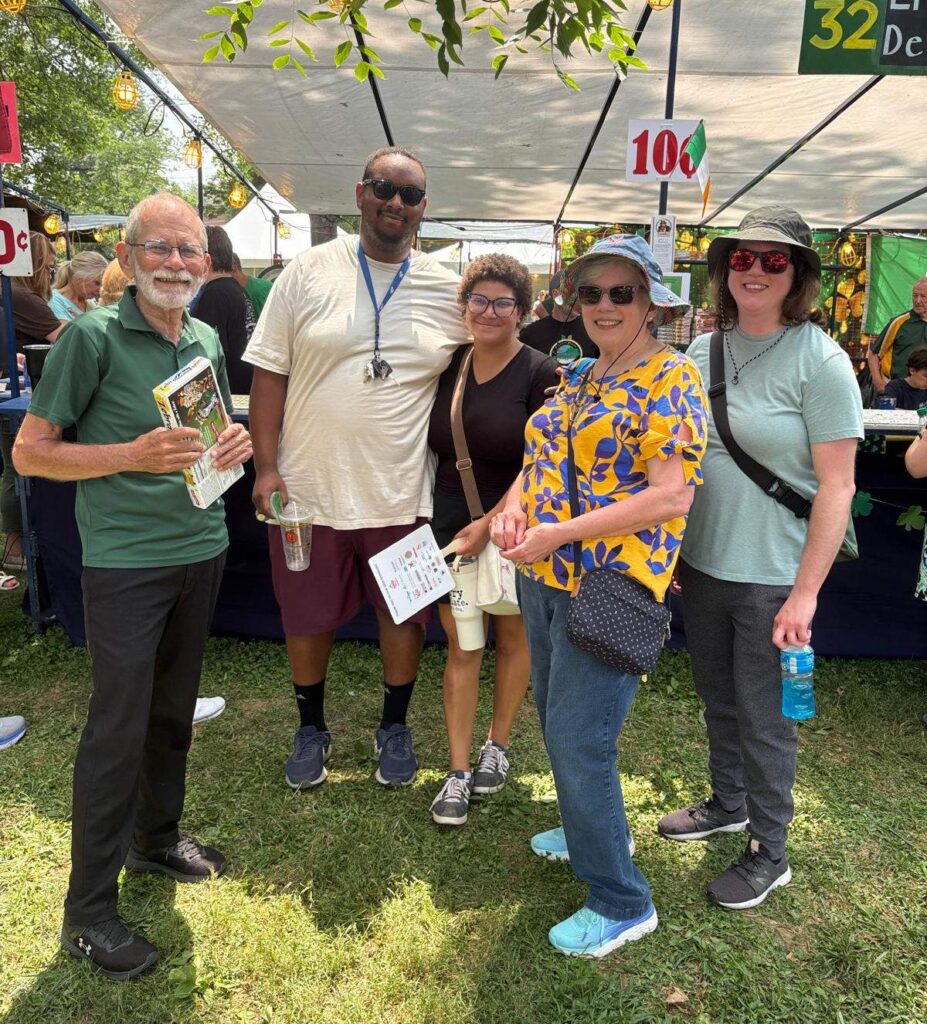
I had really good friends in Cambodia, even though for the group above I was their boss. They went out of their way to get together with me for lunch when I visited Phnom Penh in April.
HERE
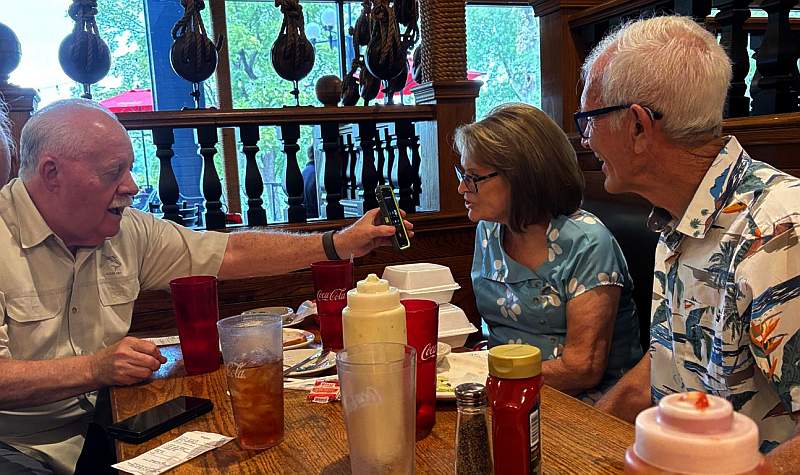
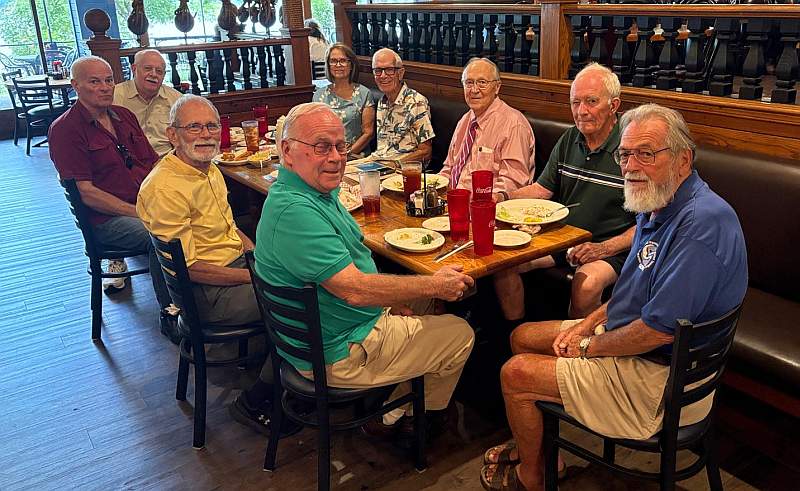
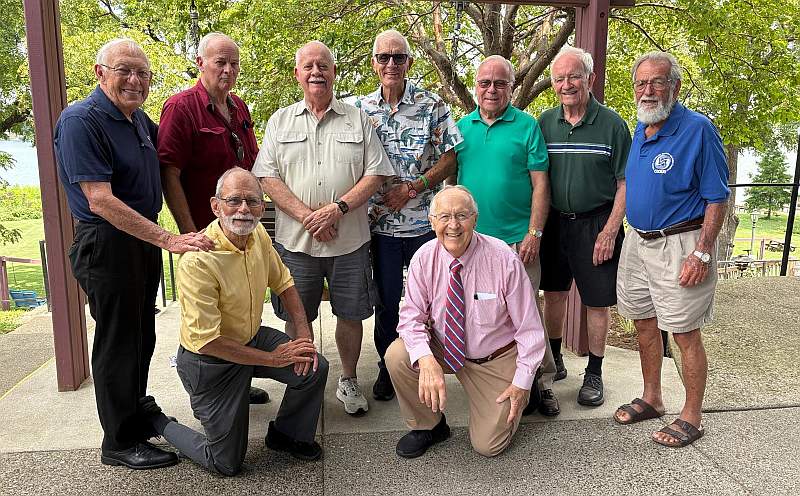
Today I had lunch with a group of guys who were with me at St. Thomas Seminary in Louisville in the early 1960s. Some of them I didn’t know so well because they were three, four, five years ahead of me. But we all shared the common experience of a minor seminary pre-Vatican II. That created an enduring bond that brought us together 65+years later. And overlaying that was the common language, the experience of living together away from home for years, a common goal in our youth, and the shared studies, meals, sports, and pillow fights in the dorm. That all makes these friendships significantly different from those of Cambodia.
Peace is not merely an absence of war; nor can it be reduced solely to the maintenance of a balance of power between enemies; nor is it brought about by dictatorship. Instead, it is rightly and appropriately called an enterprise of justice.
The operations of the St. Vincent de Paul Society in Louisville are quite extensive. Before, I showed photos of the twice-weekly food distribution. There is more.
This is the old St. Paul Church building. Now it is a dining room for the meals served to the poor and homeless.
The building’s origins are obvious. In addition to the stained glass windows, the old altar and tabernacle are still present at the front of the dining room. Lunch and dinner are served to about 290 persons every day, seven days a week. Above, volunteers are preparing to serve a lunch.
The building on the left (where the man is seated) is the old St. Paul school. Next to it is the former rectory where the priests lived. And on the far right is one of five or six residential buildings. The SVDP compound now covers an entire city block.
Two more residential buildings for the homeless. Some of them are for homeless veterans or single mothers with children or people with disabilities.
Last October, when I was in California visiting Jim and Roberta McLaughlin, returned Maryknoll Lay Missioners who had worked with me in Cambodia, Jim introduced me to the workings of the St. Vincent de Paul Society food pantry in their home parish of St. Columba. I learned a lot in my time at St. Columba.
Today I had the opportunity to visit a comparable SVDP operation in Louisville at the invitation of Ken and Diane Golliher who volunteer there. And again I learned a lot.
I was surprised to learn that while I was in Cambodia, the archdiocese had made a closed downtown parish campus available to the St. Vincent de Paul Society and Open Hand Kitchen.
The Louisville SVDP food pantry distributes food on Tuesdays and Thursdays. Some of the food comes from businesses and food services in the area. Here a group of volunteers unloads a van of donated food.
The food is first placed on shelves or in a refrigerator or freezer until it is bagged for distribution.
Some food is donated by USDA (Department of Agriculture).
Recipients of the food distribution come on Tuesday and Thursday mornings and receive two bags, one of food from USDA and another from the private sources. In addition to the food, detergents, personal care items, and other necessities are available. Approximately 130 individuals and families are served each distribution day.
LaudatoSi’ challenges us to “hear the cry of the earth and the cry of the poor” through ecological conversion, changes in lifestyle and society, and strong political action. What are Catholic Christians to do? Here are some suggestions:
4. DISCERN what you can do to change your own way of living to one that is more sustainable for the whole community. This includes reducing water usage, reducing use of plastics and eliminating Styrofoam, switching to LED lighting, planting trees and native plants, and by becoming an eco-consumer doing eco-investing.